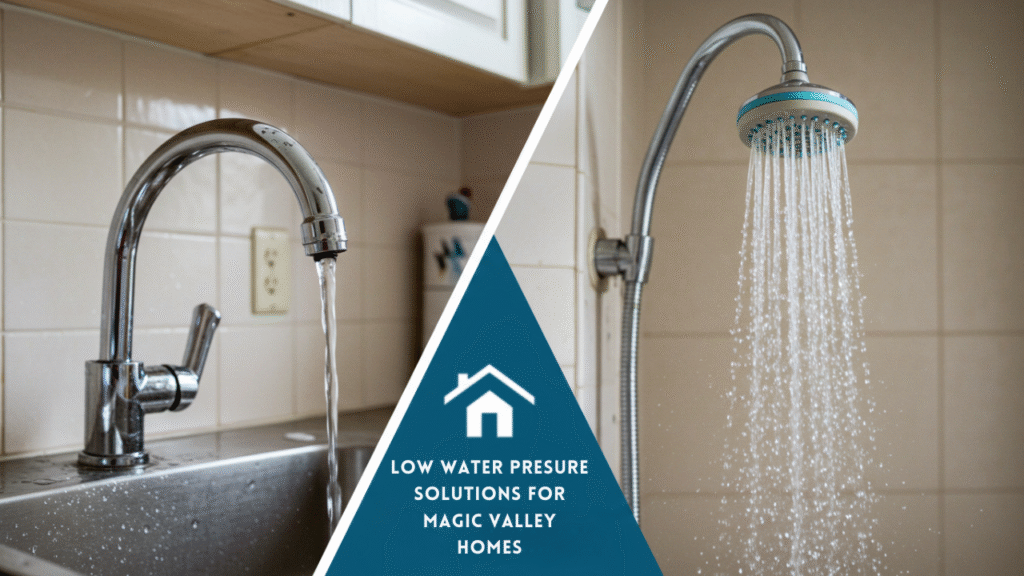
In Magic Valley and Twin Falls, the telltale signs of hard water—mineral spots on dishes, scale buildup on faucets, and reduced soap lather—are a constant frustration for homeowners and renters alike. Hard water not only mars the appearance of plumbing fixtures but can also shorten the lifespan of water heaters, dishwashers, and other appliances by clogging pipes with calcium and magnesium deposits. As a result, many Idaho residents are searching for effective hard water solutions in Idaho to protect their homes and health.
Two leading approaches dominate the market: traditional salt‑based water softeners, which remove hardness minerals via ion exchange, and modern salt‑free water conditioners, which alter mineral structure to prevent scale without using sodium.
What Is Hard Water?
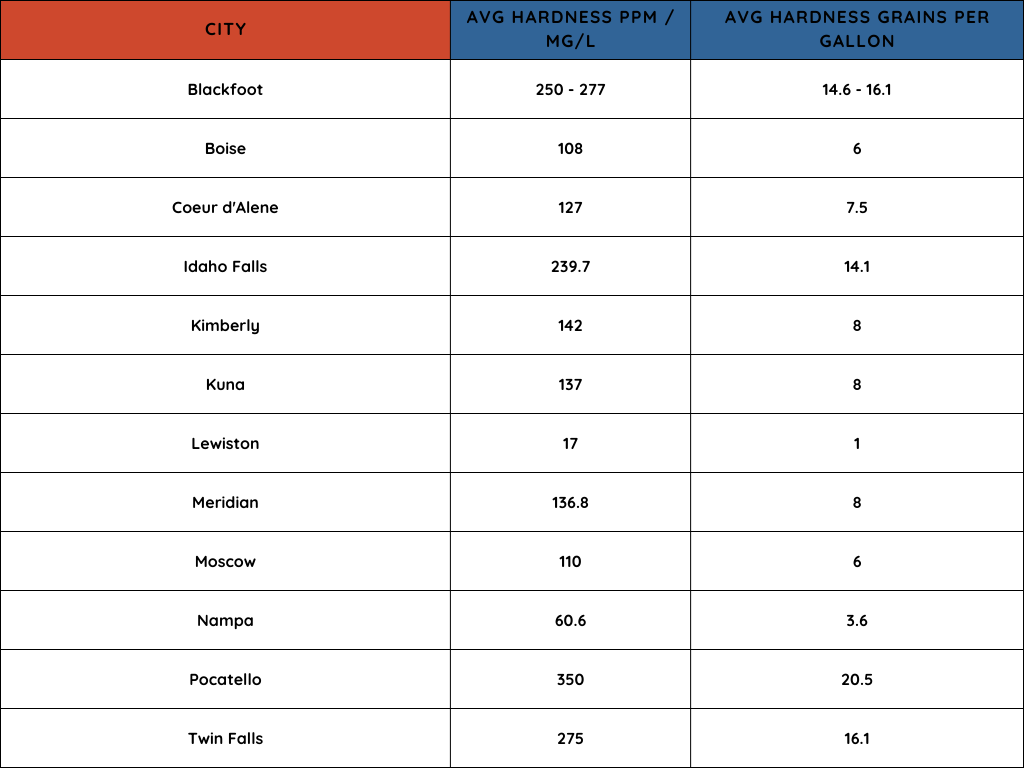
Water hardness refers to the concentration of dissolved calcium (Ca²⁺) and magnesium (Mg²⁺) ions, typically measured in grains per gallon (gpg) or milligrams per liter (mg/L). According to the Water Quality Association, water with more than 1 gpg of these minerals is considered hard, and anything above 10 gpg is classified as “very hard”. In Twin Falls, average hardness levels reach approximately 16.1 gpg (275 mg/L), placing local water squarely in the “extremely hard” category and explaining the prevalence of scale issues throughout homes in the region. Check out the water hardness values for the cities and towns in Idaho:
High mineral content not only reduces detergent efficiency—leading to dingy laundry and soap scum—but also forms limescale on heating elements and plumbing surfaces, impairing water flow and boosting energy costs . Understanding these fundamentals is crucial before deciding between salt‑based and salt‑free water treatment options.
Salt‑Based Softeners
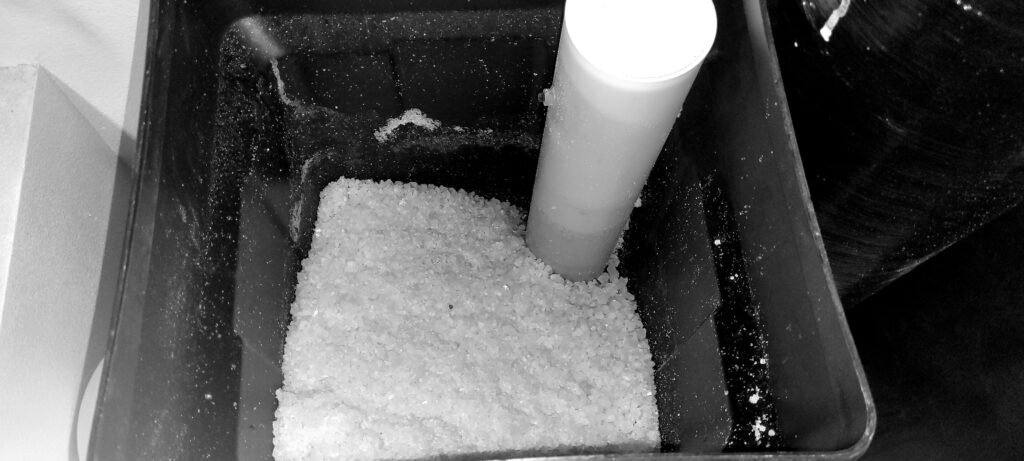
Salt‑based softeners employ an ion exchange process in which hard water passes through a resin bed charged with sodium (Na⁺) or potassium (K⁺) ions. As water flows through, calcium and magnesium ions swap places with the softer sodium or potassium ions, effectively removing up to 99% of hardness minerals.
Pros:
-
• Superior hardness removal: Nearly complete elimination of Ca²⁺ and Mg²⁺, ideal for protecting water heaters and plumbing in areas like Magic Valley .
-
• Proven performance: Decades of industry use demonstrate consistent scale prevention and appliance longevity benefits .
Cons:
-
• Salt refills required: Homeowners must replenish the brine tank with salt or potassium chloride, typically every 4–6 weeks, to maintain regeneration cycles.
-
• Maintenance needs: Periodic cleaning and possible resin replacement every 10–15 years add to long‑term upkeep.
-
• Sodium in water: Trace amounts of sodium remain in softened water, which may concern individuals on low‑sodium diets (mitigated by point‑of‑use RO filters).
Cost & Local Performance:
Professional installation of salt-based water softeners in Idaho typically ranges from $1,145 to $1,500, depending on home size and system capacity . Annual maintenance, including salt refills and routine servicing, averages around $200 to $300 . Given Twin Falls’ high hardness level of 16.1 gpg, salt-based softeners often provide the most reliable results for homes in the Magic Valley region. If you’re seeking an honest and fair quote tailored to your needs, consider reaching out to Doulos Plumbing for a personalized assessment.
Salt‑Free Water Conditioners
Salt‑free systems, often referred to as water conditioners rather than true softeners, use Template‑Assisted Crystallization (TAC) media to transform dissolved hardness ions into microscopic crystals that remain suspended in water and do not adhere to surfaces. This physical process does not remove Ca²⁺ or Mg²⁺ but prevents scale by creating seed crystals on polymer or ceramic beads, which then slough off under flow.
Benefits:
-
• No salt or brine discharge: Environmentally friendly and compliant with local regulations limiting salty effluent into septic or municipal systems.
-
• Low maintenance: Without a brine tank, there’s no need for regular salt refills—occasional media replacement every 5–10 years is typically all that’s required.
Limitations in High‑Hardness Areas:
-
• Partial scale control: While TAC can reduce scale by up to 90% in moderate hardness levels, it may struggle with water above 15 gpg—common in Twin Falls—leading to residual buildup over time.
-
• Mineral retention: Since minerals remain in solution, spotting may still occur on glassware and fixtures, though deposits wipe away more easily.
Salt‑free conditioners excel in environments where discharge regulations or low maintenance are priorities, but in regions like the Magic Valley—where hardness often exceeds 16 gpg—they are generally less effective than salt‑based systems at preventing long‑term scale accumulation.
Comparative Analysis
Below is a side‑by‑side comparison of salt‑based and salt‑free water treatment systems across three key factors:
| Criteria | Salt‑Based Softeners | Salt‑Free Conditioners |
|---|---|---|
| Performance | Removes up to 99% of calcium and magnesium, effectively eliminating scale. | Alters mineral structure via crystallization (TAC), reducing scale formation without removing hardness minerals. |
| Maintenance | Requires salt refills every 4–6 weeks and periodic resin/tank checks. | No brine tank refills; media replacement every 5–10 years only. |
| Water & Waste | Requires water for backwash cycles and discharges brine into the environment. | Zero brine discharge and minimal water usage. |
| Upfront Cost | $1,200–$1,800 installed for typical Idaho homes. | $800–$4,000 depending on capacity; often higher than salt‑based options. |
| Long‑Term Cost | $200–$300/year for salt and servicing. | Lower annual maintenance costs but higher initial investment. |
In terms of overall value, salt-based systems tend to score highest for performance, with moderate demands for maintenance and cost. Salt-free conditioners excel in low maintenance needs and environmental friendliness, but may underperform in very hard water areas and vary widely in price.
To further simplify decision-making, here’s a visual heatmap-style overview based on key homeowner priorities
Salt-Based vs. Salt-Free Water Softeners: At-a-Glance Comparison
| Feature/Factor | Salt-Based Softeners | Salt-Free Conditioners |
|---|---|---|
| Water Softening Performance | 🟩 High – Removes hardness minerals effectively | 🟨 Moderate – Reduces scale but doesn’t remove minerals |
| Maintenance Needs | 🟨 Moderate – Requires salt refills, cleaning | 🟩 Low – Minimal maintenance (media/cartridge changes) |
| System Cost (Initial + Long-Term) | 🟨 Moderate – Equipment + ongoing salt costs | 🟥 Variable – Higher upfront for quality models |
| Eco-Friendliness | 🟥 Lower – Salt discharge, extra water used | 🟩 High – No salt or discharge, low water use |
| Effectiveness in Idaho’s Hard Water | 🟩 Excellent – Handles very hard water (16+ gpg) | 🟨 Limited – May underperform above 10 gpg |
| Health Considerations | 🟨 Adds sodium – May affect low-sodium diets | 🟩 No sodium – Keeps minerals in water |
| Installation Requirements | 🟨 Moderate – May need drain line, space | 🟩 Easy – Compact and drain-free options available |
This table uses intuitive color cues (🟩 green = best, 🟨 yellow = moderate, 🟥 red = least favorable) to visualize how salt-based and salt-free water softening systems perform across key criteria relevant to Idaho homeowners:
Recommendation: For homes in Magic Valley with very hard water (16+ gpg), salt‑based softeners offer the most reliable long‑term performance and protection. However, salt‑free conditioners remain a viable solution in areas with moderate hardness, especially for homeowners who prioritize eco-friendliness and minimal maintenance.
How Doulos Plumbing Installs Water Softener Systems
At Doulos Plumbing, installation starts with a personalized water test and a quick review of your home’s plumbing layout. Once we understand your water hardness level and household needs, we’ll recommend a system that fits—whether salt-based or salt-free.
From there, our technicians handle the full setup: connecting the system to your main water line, adding bypass valves, and testing performance to ensure everything runs smoothly. We’ll also walk you through any maintenance basics like monitoring salt levels or replacing filters, so you feel confident using your system from day one.
Maintenance & Upkeep
Salt Refills: For salt‑based systems, add high‑purity sodium or potassium chloride every 4–6 weeks; frequency depends on household size and hardness level.
Brine Tank Cleaning: Annually clean the brine tank to prevent salt bridges and sludge buildup, ensuring smooth regeneration cycles.
Filter Changes: Replace pre‑filters or sediment filters every 3–6 months to protect the resin/media from debris, adjusting schedule for higher iron or sediment content.
Media Replacement: For salt‑free conditioners, plan media replacement every 5–10 years based on manufacturer recommendations.
Troubleshooting: Monitor for common issues like salt bridges (hollowed salt crust), low water pressure, or channeling in the resin bed; Doulos Plumbing offers annual service plans to address these and recalibrate settings as needed.
Whole‑House Systems
Whole‑house water softening system treats all incoming water at the point of entry, ensuring every tap, appliance, and fixture benefits from softened or conditioned water. In contrast, point‑of‑use systems—such as under‑sink or refrigerator filters—only treat specific outlets and cannot prevent scale buildup in appliances like water heaters or washing machines.
Benefits of Whole‑House Systems
-
• Comprehensive Protection: Eliminates scale throughout your home’s plumbing network, extending appliance lifespan and maintaining water efficiency.
-
• Cost Efficiency: While initial investment is higher, a single whole‑house system is often more cost‑effective than multiple point‑of‑use units when treating the entire home.
-
• Convenience & Health: Delivers consistent water quality for bathing, cooking, and cleaning without the need for separate filters at each location.
-
• Property Value: Professional whole‑house installations by Doulos Plumbing can increase resale appeal by showcasing modern, low‑maintenance water treatment solutions
Frequently Asked Questions
1. Do salt‑based systems add sodium to drinking water?
Yes. During ion exchange, sodium ions replace hardness minerals, resulting in trace amounts of sodium in softened water. However, the added sodium typically remains below health‑concern levels for most individuals.
2. Can you drink softened water?
Absolutely. Softened water is safe for consumption and cooking—even though it contains slightly more sodium, it poses no health risk for people without sodium‑restricted diets. For low‑sodium needs, a reverse‑osmosis filter can be installed at drinking‑water outlets.
3. How often should I service my water softener?
Most manufacturers and experts recommend a professional service at least once a year to inspect components, clean tanks, and ensure optimal operation. Monthly salt level checks and annual brine‑tank cleanings help prevent issues like salt bridging.
4. What maintenance do salt‑free conditioners require?
Salt‑free systems need minimal upkeep: replace TAC or filter cartridges every 6–12 months, and swap the media every 5–10 years per manufacturer guidelines.
5. How do salt‑based and salt‑free systems differ?
Salt‑based softeners remove hardness minerals via ion exchange, while salt‑free conditioners use crystallization or chelation to prevent scale without extracting minerals.
6. How much water does a salt‑based softener use per regeneration?
Each regeneration cycle typically consumes 20–70 gallons of water, depending on system capacity and regeneration settings.
The Smart Choice for Hard Water Solutions in Idaho
Choosing the right hard water solutions in Idaho requires balancing performance, maintenance, and cost considerations specific to Magic Valley’s high hardness levels (≈16 gpg). Salt‑based softeners offer superior hardness removal and long‑term value despite regular salt refills, while salt‑free conditioners deliver low‑maintenance, eco‑friendly scale control for moderate hardness situations. Whole‑house systems ensure comprehensive protection, safeguarding every fixture and appliance in your home from damaging scale buildup.
Doulos Plumbing Team
Serving the Magic Valley with expert plumbing services. From water heaters to sewer lines, Doulos Plumbing is here to help Twin Falls and surrounding communities.