From Space Stations to Twin Falls Kitchens
Astronauts don’t pack gallons of bottled water into space. They recycle it—using a high-tech process called reverse osmosis. Yep, the same technology filtering their water in orbit is available under your kitchen sink.
And while Twin Falls isn’t exactly orbiting the Earth, our tap water can still raise a few eyebrows. Between aging infrastructure, mineral-heavy sources, and those mysterious “why does this taste like a swimming pool?” moments, many locals are turning to more advanced filtration options.
This post is your crash course in reverse osmosis: what it is, how it works, what it removes, and why it might be the best water decision you make this year.
What Is Reverse Osmosis, Really?
Reverse osmosis (RO) is a water purification process that uses pressure to push water through a semi-permeable membrane. Only the smallest molecules—like pure H₂O—can pass through. The rest? Sent packing.
Think of it like a molecular bouncer:
If you’re a water molecule, you’re on the list.
If you’re lead, arsenic, nitrates, chlorine, or anything remotely sketchy—you’re out.
The result is water that’s exceptionally clean. RO systems don’t just reduce a few contaminants—they strip out the ones you’ve heard of and the ones you haven’t.
Here’s a simple way to picture it:
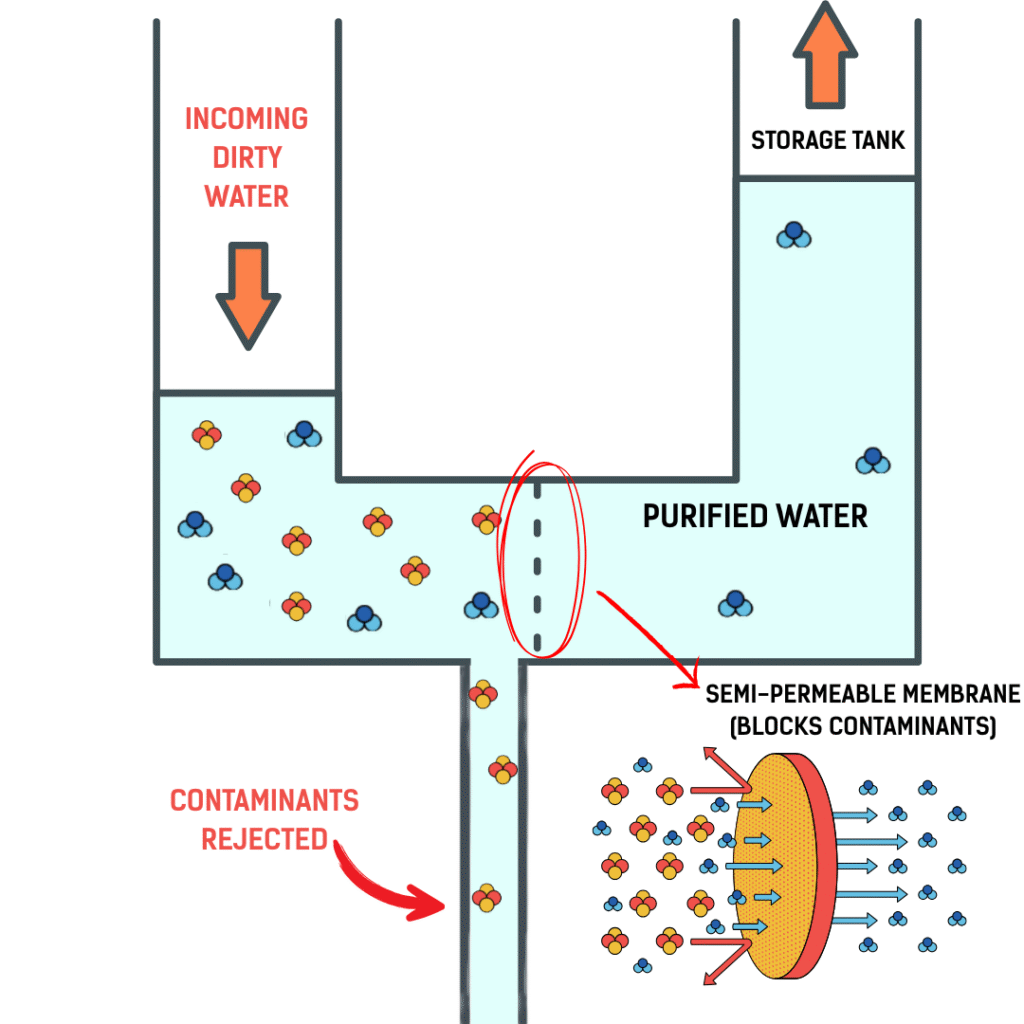
This technology isn’t just for space missions. It’s also used by the military, bottled water companies, and increasingly—homeowners who want more confidence in what comes out of their tap.
What Reverse Osmosis Removes
Reverse osmosis is the bouncer at the door of your water supply—and it has a strict guest list. This system isn’t here to play favorites with contaminants. If it’s dissolved, dangerous, or even remotely suspicious, it’s likely getting rejected.
Here’s a breakdown of what RO systems kick out:
• Lead – Even trace amounts of lead can be harmful, especially for children. No safe level has been identified by the EPA. RO filters are one of the most effective ways to eliminate it.
• Arsenic – Naturally occurring in groundwater across the western U.S., arsenic has been linked to increased cancer risk and other health issues. RO membranes block both types: arsenic III and V.
• Fluoride – Though added to water in many cities, some homeowners prefer to remove it for personal or health reasons. RO is one of the few residential filters that actually does.
• Uranium – Yes, really. Uranium occurs naturally in Idaho rock formations and has been detected in wells and groundwater throughout southern Idaho. Chronic exposure can damage kidneys and increase cancer risk.
• Nitrates – A common contaminant in agricultural regions like Magic Valley. High levels can pose serious risks to infants and pregnant women, including a condition called “blue baby syndrome.”
• Chlorine – Added to kill bacteria, but too much can affect the taste, smell, and potentially form harmful byproducts (like trihalomethanes). RO systems often include a carbon pre-filter to handle this.
• PFAS & VOCs – PFAS (aka “forever chemicals”) are industrial compounds that resist breakdown and are increasingly found in U.S. drinking water. Reverse osmosis is one of the few filtration methods that can reduce PFAS and other volatile organic compounds.
Did You Know?
According to the Environmental Working Group (EWG), Idaho has over 460 public water systems with nitrate levels exceeding health guidelines—and hundreds more reporting contaminants like arsenic, uranium, and radium. These issues affect over 1.2 million residents statewide.
In fact, over 90% of Idaho residents get their drinking water from groundwater sources, where these contaminants are naturally more concentrated.
So yes—RO isn’t just “fancy filtered water.” It’s the line of defense between your tap and a long list of potentially harmful substances you don’t want in your coffee, cooking, or kids’ water bottles.
How RO Systems Work (In 5 Simple Steps)
Think of a reverse osmosis system as a water obstacle course—only the purest make it to the finish line. Here’s a no-jargon breakdown of what happens inside that sleek unit under your sink:
1. Sediment Pre-Filter
The first line of defense. This stage catches sand, dirt, rust, and other visible particles that could clog up the rest of the system. Think of it like a coffee filter—but for rocks.
2. Carbon Filter
Next, a carbon filter steps in to absorb chlorine, chloramine, and other chemicals that can damage the membrane or affect taste and smell. This is the “bouncer” making sure chemical troublemakers don’t make it to the main event.
3. RO Membrane
This is the star of the show. The semi-permeable membrane uses pressure to force water molecules through microscopic pores, rejecting everything from dissolved salts to uranium, nitrates, and PFAS. If it’s not water, it’s not getting through.
4. Storage Tank
RO water flows slowly—so the system stores clean water in a pressurized tank until you need it. That way, when you turn on the faucet, you don’t have to wait forever for a glass of ultra-pure water.
5. Post-Filter (Optional)
Some systems include a final polishing filter, often carbon again, to make sure your water tastes crisp and fresh before it reaches your glass.
Under-Sink vs. Whole-Home Systems
Most RO systems are installed under the kitchen sink and filter only drinking and cooking water. Whole-house reverse osmosis systems do exist, but they’re pricey, waste more water, and typically aren’t necessary unless you’re dealing with extremely poor water quality throughout the home (or you just really love clean shower water).
Pros and Cons: Is RO Right for You?
Reverse osmosis systems are like water snobs—they don’t let just any molecule through. But that level of filtration comes with both benefits and trade-offs. Here’s the honest breakdown:
Pros:
1. Removes Nearly Everything Harmful
Lead, arsenic, fluoride, nitrates, chlorine, PFAS—RO doesn’t play around. It’s one of the most thorough residential filtration options available.
2. Improves Taste and Odor
Water that’s been through RO often tastes cleaner and smoother—like it belongs in a glass bottle with a fancy label. If you’re dealing with sulfur smells or metallic aftertastes, this is your fix.
3. Safe for Sensitive Situations
Perfect for households with babies, elderly residents, immunocompromised individuals, or coffee and tea purists who don’t want tap funk messing with their brew.
Cons:
1. Water Waste
For every gallon of filtered water, most RO systems waste 2–4 gallons. Some newer models are more efficient, but it’s something to consider—especially in drier Idaho summers.
2. Slower Flow Rate
That microscopic filtering takes time. RO systems typically fill a storage tank slowly, and flow from the RO tap may not be as strong as your regular faucet.
3. Removes Healthy Minerals Too
RO doesn’t discriminate—it strips calcium, magnesium, and potassium along with the bad stuff. You can add minerals back in with a remineralization cartridge if needed.
4. Maintenance Required
You’ll need to change filters every 6–12 months and replace the RO membrane every 2–3 years. Not a dealbreaker, but don’t ghost your system if you want it to keep working.
So… Is RO Right for You?
If you want ultra-clean drinking water, don’t mind a little upkeep, and are okay with a slower flow and some water waste, reverse osmosis is one of the best choices you can make. Especially in Twin Falls, where groundwater can be sketchy and city water has its quirks.
Why RO Is a Smart Move for Twin Falls Homes
Let’s talk local. Twin Falls water isn’t always a crystal-clear mountain stream. Whether you’re on city supply or still pulling from a private well, your tap may carry more than just H₂O.
Here’s why reverse osmosis makes sense for homes right here in the Magic Valley:
Hard Water? You Bet.
Twin Falls is known for mineral-rich (read: hard) water. While RO doesn’t soften water for the whole house, it removes dissolved solids and minerals from your drinking supply—so your morning coffee doesn’t taste like it came out of a sprinkler.
Bonus tip: Pair RO with a whole-home softener if you’re tired of soap scum and stiff laundry.
Older Homes, Older Pipes
Many neighborhoods in Twin Falls—especially around Downtown, Rock Creek, and Blue Lakes—have aging plumbing. Reverse osmosis adds a safety layer between your family and whatever might be leaching from those pipes.
Still on a Well? Even More Reason
Wells can be unpredictable, and Idaho groundwater has been found to contain nitrates, uranium, and arsenic in some areas. RO can take those out—without the guesswork.
Peace of Mind, Glass by Glass
Whether you’re cooking, mixing baby formula, or just filling a bottle for a hike in the canyon, RO water means no second-guessing what’s in your glass.
Maintenance Tips: Set It and Forget It (Mostly)
Reverse osmosis systems don’t ask for much—but a little upkeep goes a long way to keep your water clean and your system running smoothly.
Here’s the short list:
-
• Change pre- and post-filters annually. These handle the bulk of the gunk before it reaches your RO membrane.
-
• Replace the RO membrane every 2–3 years. It’s the workhorse—don’t let it burn out.
-
• Protect the system with sediment and carbon pre-filters. Especially important in areas like Twin Falls where hard water and mineral buildup are common.
-
• Don’t want to deal with it?
Doulos Plumbing offers a yearly RO check-up service. We inspect, replace filters, and make sure your system is running like it should—no tools or trips to the hardware store required.
Final Thoughts: The Zen of RO Water
Reverse osmosis isn’t just water—it’s water that’s been through therapy, detoxed, and read a self-help book. It’s the cleanest sip you’ll take all day, and it starts right under your sink.
Whether you’re a new homeowner, running on a well, or just tired of sketchy-tasting tap water, installing an RO system is one of the simplest ways to take control of your water quality in Twin Falls.
Frequently Asked Questions About Reverse Osmosis (For Twin Falls Homes)
Q1: What is reverse osmosis and how does it work?
A: Reverse osmosis is a filtration method that uses a membrane to remove dissolved solids, contaminants, and impurities from water.
Q2: Is reverse osmosis water safe to drink every day?
A: Yes. It’s among the purest water you can get at home, and many systems include mineral re-addition for taste and health.
Q3: How much does a reverse osmosis system cost in Twin Falls?
A: Most under-sink systems range from $300–$600 installed. Doulos Plumbing provides transparent estimates.
Q4: Does RO waste a lot of water?
A: Traditional systems waste 2–4 gallons per gallon produced, but newer models and eco-options can reduce that.
Q5: Do I need reverse osmosis if I already have a water softener?
A: Yes—softeners remove hardness minerals like calcium and magnesium. RO handles contaminants softeners can’t touch.
This blog was created with the help of LeadProspectingAI—smarter content for growing local businesses.
Doulos Plumbing Team
Serving the Magic Valley with expert plumbing services. From water heaters to sewer lines, Doulos Plumbing is here to help Twin Falls and surrounding communities.