Choosing the Right Water Heater for Your Twin Falls Home
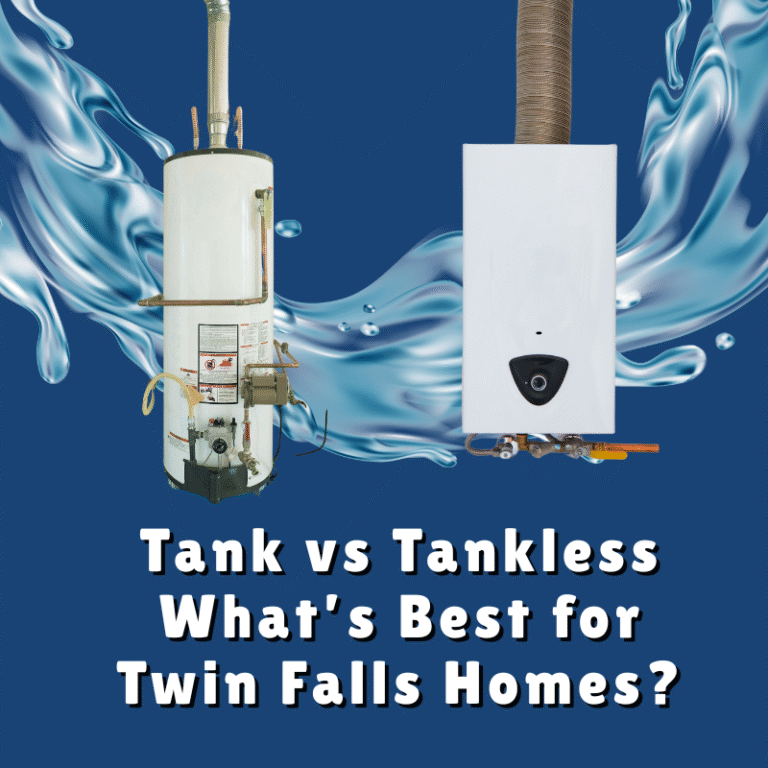
Tank vs tankless water heater choices are a big decision for Twin Falls homeowners — one that can affect energy costs, comfort, and long-term home value. In fact, water heating accounts for nearly 20% of household energy use in Twin Falls homes, according to regional energy data.
Choosing the right system isn’t just about hot water; it’s about making sure your home is equipped for the local climate, your family’s daily needs, and the rising cost of utilities. Both tank and tankless models have strengths, and the best choice often depends on factors like your home’s age, size, and how much hot water you use at once.
In this guide, we’ll break down the pros, cons, and real-world considerations so Twin Falls homeowners can make a smart, future-ready decision that fits their budget and lifestyle.
How Water Heaters Handle Cold Idaho Winters
When choosing the best water heater for cold climates, Twin Falls homeowners need to consider how their system will perform during our chilly winters. With average lows dipping well below freezing, cold incoming water puts extra strain on any water heater — and can lead to lukewarm showers if your system isn’t up to the task.
Tank water heaters generally do a solid job keeping up in cold weather, since they store a reserve of hot water ready to go. However, they can lose heat as water sits in the tank — making good insulation and regular maintenance essential for efficiency.
Tankless water heaters (also called on-demand systems) heat water as it flows through the unit. In winter, this means they work harder to bring icy water up to temperature. Some models include freeze protection and preheating technology, but sizing your unit correctly and professional installation are key to avoiding performance dips.
Freeze prevention tip: Whether you choose tank or tankless, ask your plumber about proper placement, pipe insulation, and built-in freeze protection features — especially for equipment in garages, basements, or exterior walls.
Traditional Water Heaters: Pros, Cons, and When They Make Sense
When weighing options, it’s smart to understand the traditional water heater pros and cons — especially for Twin Falls homes where energy efficiency and reliability matter.
Pros of traditional (tank-style) water heaters:
• Lower upfront cost — Tank models are generally more affordable to purchase and install.
• Familiar technology — Most plumbers and homeowners are familiar with their maintenance and repair needs.
• Reliable supply for consistent use — Great for households where water usage is predictable, like families with set routines.
Cons of traditional water heaters:
• Space requirements — Tanks take up more room, which can be a challenge in smaller homes or tight utility areas.
• Standby energy loss — Tanks continually keep water hot, so energy is used even when no hot water is being drawn.
When a tank water heater makes sense:
If your household uses a steady amount of hot water (such as with multiple showers in the morning or daily laundry), and you’re looking for a budget-friendly, tried-and-true option, a traditional water heater could be the right fit.
Tankless Water Heaters: The Modern Upgrade
Tankless water heater installation is becoming a popular choice for Twin Falls homeowners looking for efficiency and convenience. Unlike traditional models, tankless units heat water on demand — meaning no storage tank and no running out of hot water mid-shower.
Benefits of tankless water heaters:
• Endless hot water — Perfect for large families or homes with high hot water demands.
• Space-saving design — Compact units free up valuable room in your utility area or garage.
• Energy efficiency — No standby heat loss since water is heated only when needed, which can reduce utility costs over time.
Twin Falls installation considerations:
• Some homes may need gas line upgrades to handle the higher fuel demand of tankless units.
• Hard water in Twin Falls can cause mineral buildup — installing a water softener or filter can help protect your tankless system and extend its lifespan.
Energy Efficiency and Savings: Which Type Wins?
Energy Efficiency and Savings: Which Type Wins?
When it comes to choosing energy efficient water heaters, it pays to look beyond the sticker price. The real cost of ownership comes down to how much energy your system uses year after year.
In Twin Falls, where Idaho Power’s average residential rate is about 9 cents per kWh (2025 data), here’s what you could expect over time:
| Water Heater Type | 5-Year Energy Cost | 10-Year Energy Cost | 15-Year Energy Cost |
|---|---|---|---|
| Traditional Tank | ~$2,160 | ~$4,320 | ~$6,480 |
| Tankless | ~$1,295 | ~$2,590 | ~$3,885 |
Why the difference?
• Traditional tank heaters keep water hot 24/7—even when you’re not using it—leading to more energy consumption.
• Tankless systems heat water on demand, eliminating standby heat loss and saving energy over time.
Tip: If long-term energy savings is your top goal, tankless water heaters usually win—especially in households that don’t need large amounts of hot water at the same time.
Water Heater Lifespan and Replacement Costs
Understanding how long water heaters last and what it costs to replace them in Twin Falls helps homeowners plan smarter—and avoid surprises:
Lifespan:
• Traditional tank heaters typically last 8–12 years, with electric units often reaching up to 12–15 years.
• Tankless heaters are built to last longer—usually 15–20 years, and some models even reach 25–30 years.
Idaho’s colder winters and mineral-rich water may shorten tank lifespan, so regular maintenance is key—especially in Twin Falls where colder temperatures and hard water are common.
Replacement Costs:
Based on 2025 national and local data, here’s what homeowners in Twin Falls can expect to pay:
| Water Heater Type | Estimated Replacement Cost |
|---|---|
| Traditional (Tank) | $882–$1,808 (avg ~$1,329) |
| Tankless | $1,400–$3,900 (unit + install) |
| Twin Falls Specific | $442–$1,477 total (local range) |
Factors that can adjust your price:
• Fuel type (electric vs. gas)
• Labor & permits
• Location in the home (accessible vs tight spaces)
• Extra work like venting or rewiring for tankless units
Local Insight for Twin Falls
• Labor in our area typically runs between $104–$757, depending on complexity.
• Tankless installations may cost more upfront, but their longer lifespan and energy savings can offset the initial investment.
If your water heater is over 10–12 years old, showing signs of rust, or not heating well, it’s time to consider replacement. Whether you stick with a traditional tank or upgrade to tankless, Doulos Plumbing provides reliable installation, free estimates, and tailored guidance for Twin Falls homeowners.
What’s Best for Twin Falls Homes?
When it comes to choosing between a tank and tankless water heater, it really depends on your household size, budget, and energy savings goals.
Larger households or homes with high, simultaneous hot water use often prefer traditional tank water heaters for consistent flow at multiple taps.
Smaller households or energy-conscious families looking to reduce long-term utility costs might lean toward tankless water heaters for their efficiency and space-saving design.
Budget-wise, tanks have a lower upfront cost, but tankless systems can pay off with savings over time—especially in Twin Falls, where hard water can wear on older systems.
Need help deciding between a tank or tankless water heater? Doulos Plumbing offers honest advice, free estimates, and expert installation in Twin Falls. Call or text us at (208)544-4922 to get started!
Frequently Asked Questions
What’s better for Twin Falls: tank or tankless water heaters?
It depends on your home’s size and usage. Tank models work well for large families with high simultaneous hot water demand. Tankless units are better for energy efficiency, smaller households, and homes looking to save on long-term utility costs.
How much does it cost to replace a water heater in Twin Falls in 2025?
In 2025, replacement costs in Twin Falls average:
• Traditional tank water heater: $1,500–$2,800 (including installation)
• Tankless water heater: $3,200–$5,000 (including installation and any needed upgrades)
Do tankless water heaters work well in cold Idaho winters?
Yes, modern tankless water heaters are designed to handle cold incoming water. Proper sizing, installation, and freeze protection features ensure reliable hot water even during freezing temperatures.
How long do water heaters last in Twin Falls homes?
Traditional tank water heaters typically last 8–12 years in Twin Falls, depending on water quality (our hard water can shorten lifespan without maintenance).
Are tankless water heaters really more energy efficient?
Yes. Tankless water heaters only heat water when needed, avoiding standby heat loss. Most Twin Falls homeowners see 20%–35% lower energy use compared to traditional tanks.
Can I switch from tank to tankless easily?
It’s possible, but it may require upgrades like larger gas lines, venting, or electrical work. A plumber like Doulos can assess what’s needed for your home.
What size water heater do I need for my Twin Falls home?
• Tank water heaters: Typically 40–50 gallons for a 3–4 person household.
• Tankless: Sized by flow rate (usually 6–10 gallons per minute for average families).
A professional sizing ensures you don’t run short during peak use.
How long does it take to install a tankless water heater?
On average, a tankless water heater installation takes 6–10 hours, depending on needed upgrades (like gas lines or venting).
Do tankless water heaters need special maintenance in Twin Falls?
Yes—due to hard water, annual descaling or flushing is recommended to keep performance high and extend lifespan.
When should I call Doulos Plumbing to replace my water heater?
If your water heater is 8+ years old, leaking, making strange noises, or not keeping up with demand, it’s time to call Doulos Plumbing for an inspection or replacement estimate.
Doulos Plumbing Team
Serving the Magic Valley with expert plumbing services. From water heaters to sewer lines, Doulos Plumbing is here to help Twin Falls and surrounding communities.